Run·Road
Wrocław
Biegi Wrocław
Eseményindexünkben Biegi Wrocław 2026 néven szerepel.

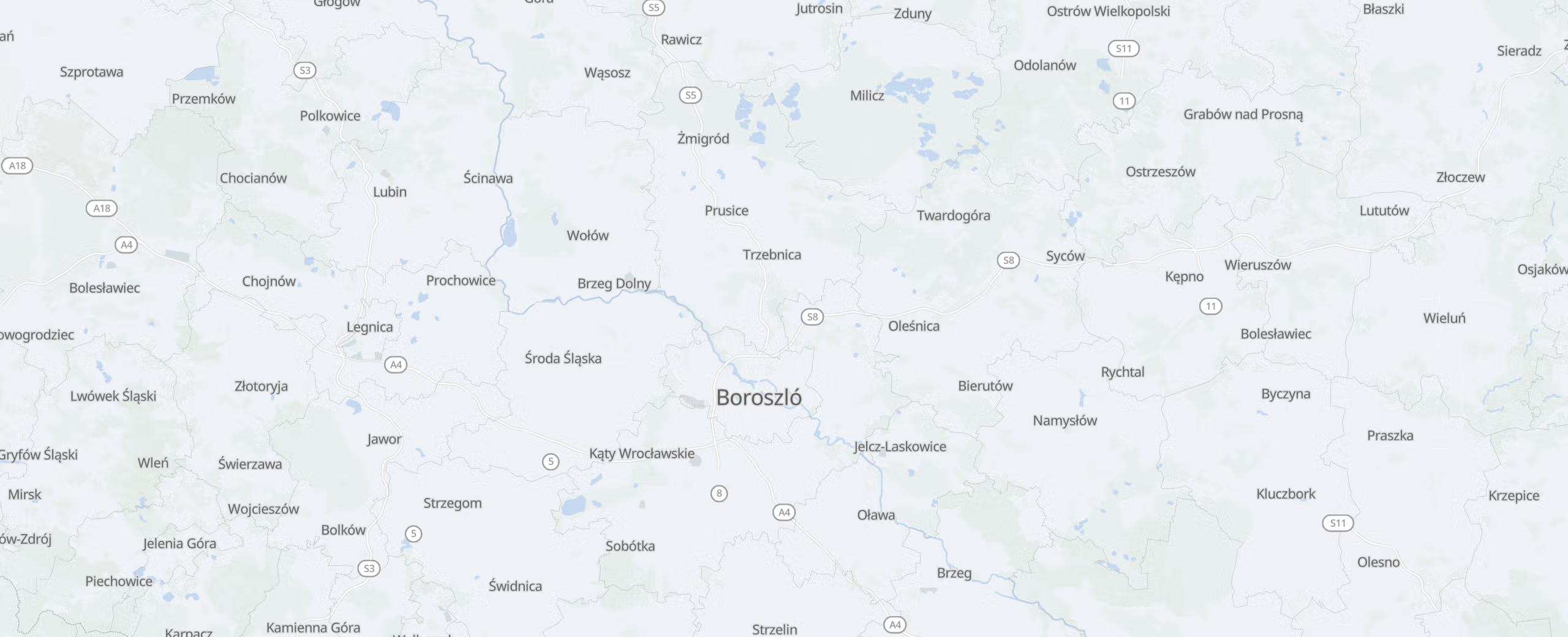 © OpenStreetMap
Wrocław
Częstochowa159
Poznań136
Pardubice273
Gliwice235
Liberec195
Opole131
Wałbrzych93
Összes 278 esemény megtekintése a térképen
© OpenStreetMap
Wrocław
Częstochowa159
Poznań136
Pardubice273
Gliwice235
Liberec195
Opole131
Wałbrzych93
Összes 278 esemény megtekintése a térképen
Road, trail, gravel, MTB — bármi legyen is, nálunk megtalálod. Találj valamit, amiről érdemes mesélni a barátaidnak.
Több mint 85 000 eseménnyel 2026-ban, a világ legnagyobb állóképességi esemény adatbázisával rendelkezünk — a leggyorsabb módja annak, hogy versenyt találj a közeledben.
Eseményindexünkben Biegi Wrocław 2026 néven szerepel.
A Tour of Małopolska egy profi férfi országúti szakaszverseny, amit minden évben Lesser Poland területén rendeznek, Kraków környékén, Dél-Lengyelországban. Helyben Małopolski Wyścig Górski néven fut, angolul Tour of Lesser Poland, és 2005 óta stabil része a UCI Europe Tour naptárának. A versenyt először 1961-ben rendezték meg, a korai 1990s-ben volt egy rövidebb szünet, így ma Lengyelország egyik legrégebb óta futó bringás eseménye. A program általában három vagy négy szakaszból áll, előtte egy prológgal, amit sokszor Kraków’s Main Market Square-en raknak le, és ez beleszámít az összetettbe is. Az útvonal többnyire dombos vagy hegyes terepen megy, szóval inkább azoknak fekszik, akik jól bírják a folyamatos emelkedőket és a változó terepet, nem a sík sprintbefutókra van kihegyezve. Az utóbbi években az első országúti szakasz gyakran az Alwernia to Trzebinia pályán ment. A szervező a Gazeta Krakowska, a legtöbb összetett győzelem rekordját pedig Zbigniew Piątek tartja három sikerrel.
A Triathlon Wrocław a mezőnyt először az Oder River vízébe küldi Wrocław közepén, aztán jönnek a városi utak Lower Silesia fővárosában. Nyári triathlon, két távval: 1/4 IM, benne 950 m úszás, 45 km bringa és 10.5 km futás, illetve 1/8 IM, ahol 425 m úszás, 22.5 km bringa és 5.25 km futás vár. A rövidebb táv miatt azoknak is vállalható, akik még csak most szoknak bele a triathlonba, a hosszabb pedig a rutinos age-groupereknek ad egy rendes, tartalmas versenynapot. A bringapálya fő városi utcákon és az elkerülőn megy, szóval ez nagyon is városi verseny, nem az a csendes, vidéki triathlon. A futáson végig ott marad a város közelsége, és az eseményt eleve azért hozták létre, hogy a triathlont és Wrocław városát is jobban előtérbe tegye. A nevezői létszám limitált: 500 induló fér be az 1/8 IM-re és 1,200 a 1/4 IM-re. Versenyengedély nem kell, a résztvevőknek legalább 15 évesnek kell lenniük, és a fő verseny mellett kísérőprogramok, valamint jótékonysági aktivitások is vannak.
Futás: Itt nálunk a legtöbb futás az Oder River, Stara Odra, Kanal Powodziowy, Ślęza meg a régi várárok körül megy, mert a város sík terepet ad, és simán megvan a base miles, nem kell sokat agyalni. Lehet futni 8 km-es meg 13 km-es köröket, amik érintik a Market Square-t, parkokat meg a vízparti sétányokat. Wyspa Słodowa Park, Park Biskupiński, Szczytnicki Park és Grabiszynski Park simán jó easy Z2-re, Kanalowa meg adja a földes talajt a tempósabb intervallokhoz. A Wroclaw Run minden szombaton 10:00 AM-től 11:30 AM-ig találkozik az ulica Strażnicza 4A-nál, és a helyiek a PKO Wrocław Maraton, Wrocław Night Half Marathon 2026, Runmageddon Wrocław meg a Wrocławska Dycha Jesien-t használják fő eseményeknek.
Kerékpározás: Wrocławot a helyiek úgy tekerik, mint egy vegyes zsákmányt: van itt város, folyók, falvak, dombok meg gravel szakaszok. A Wroclaw Fortress Route ad egy 54 km-es kört a város körül, az Oder Trail meg a hosszabb távokat viszi. Az EuroVelo 9 észak Wrocławban indul, aztán megy Pawłowice, Psie Pole, Zacisze, Plac Grunwaldzki, Plac Dominikański, Plac Kościuszki, Plac Powstańców Śląskich, Al. Gen. J. Hallera és Muchobór Wielki felé, majd Krzeptów irányába tart tovább. A JustGo körök jók gravelre, cyclocrossra meg base miles-ra, 30 perctől 4 óráig. Towarzystwo Gimnastyczne „Sokół”, Śląsk Wrocław club és WTS Sparta Wrocław is ott van a helyi klubok között. Az emelkedők meg Gajowe Hill, Maślickie Hill meg a Trzebnickie Hills környékén vannak.
Szezon: Szeptember jó a maraton ritmusra, június eleje a PKO Wrocław Maraton-ra, április vége a Bieg Kobiet Zawsze Pier(w)si-re, november vége meg a Wrocławski Bieg Niepodległości z Wąsem-re. Nyáron jön a meleg, napos edzés, és egy-egy vihar simán elronthatja a tiszta Z2 tekerést vagy az intervall edzést, úgyhogy gyorsan útvonalat kell váltani. A belváros melegebb, mint a külváros, amikor beüt a városi hősziget, szóval a helyiek a könnyű futásokat inkább a folyóparti utakra meg a parkokba viszik. Évente kb. 5 nap van, amikor tényleg hideg van, úgyhogy a futók meg a bringások több réteggel meg egyenletesebb tempóval mozognak.

 Corrida de la BeaujoireNantes, Franciaország
Dec 28
run
02
Corrida de la BeaujoireNantes, Franciaország
Dec 28
run
02
 Krhanický krosKrhanice, Csehország
May 17
run
03
Krhanický krosKrhanice, Csehország
May 17
run
03
 The Classic TessenderloTessenderlo, Belgium
Jul 06
run
04
The Classic TessenderloTessenderlo, Belgium
Jul 06
run
04
 1° StraovadaOvada, Olaszország
May 26
run
05
1° StraovadaOvada, Olaszország
May 26
run
05
 Trail do SerroteAnadia, Portugália
Mar 14
run
06
Trail do SerroteAnadia, Portugália
Mar 14
run
06
 Skatås sjöar 2026Delsjöbadet, Göteborg, Svédország
Aug 29
run
07
Skatås sjöar 2026Delsjöbadet, Göteborg, Svédország
Aug 29
run
07
 SenderberglaufWindischgarsten, Ausztria
Oct 03
run
SenderberglaufWindischgarsten, Ausztria
Oct 03
run